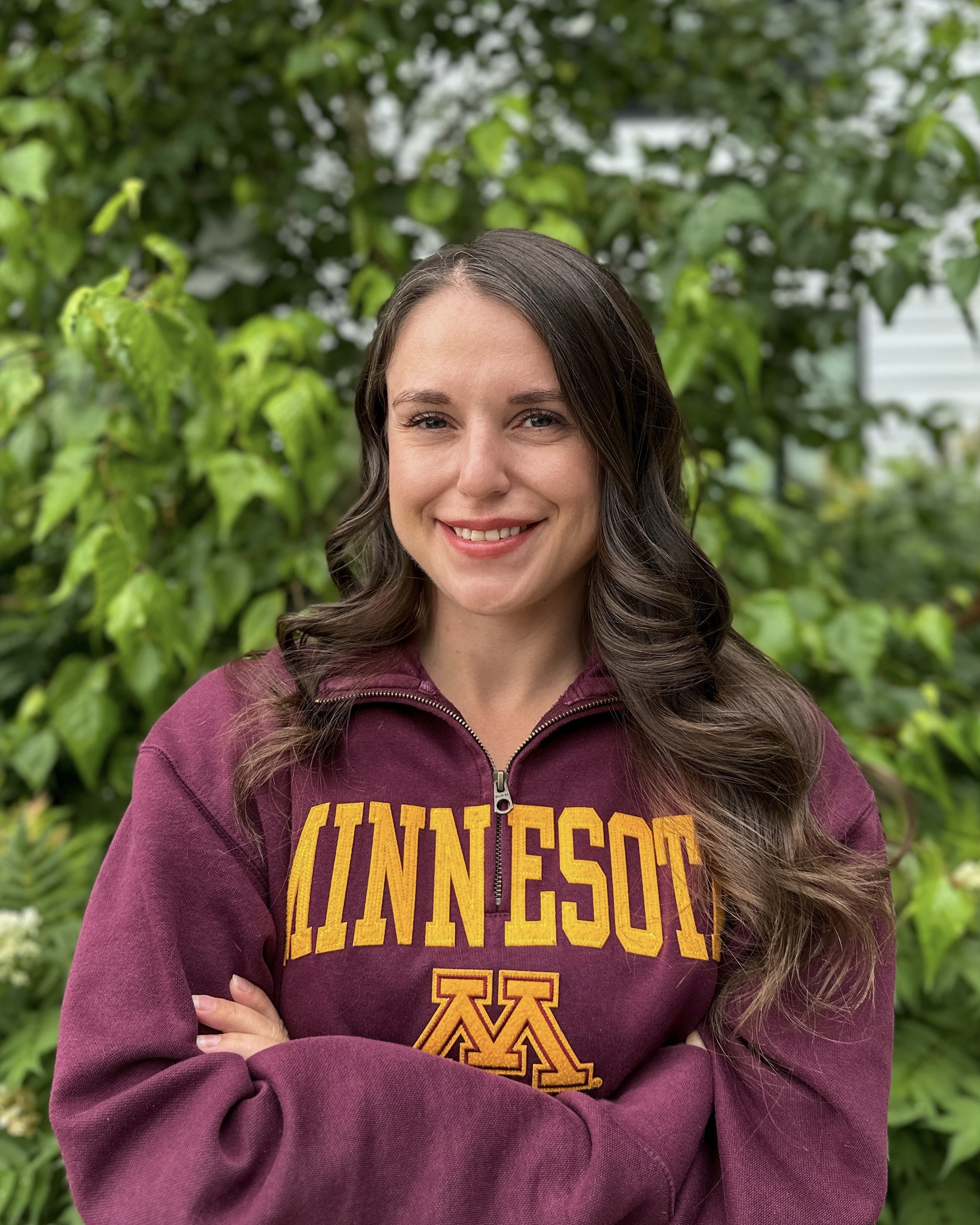
Maryam Mahmoudi, PhD
Pronouns: she/her
Working with Dr. Eric Feczko
SUMMARY OF CURRENT RESEARCH
I am a postdoctoral associate at the Masonic Institute for the Developing Brain (MIDB), affiliated with the Center for Neurodevelopmental Neuroimaging (CDNI). I joined MIDB through the Institute on Community Integration (ICI) and became a member of CDNI in 2022 under the mentorship of Dr. Eric Feczko and Dr. Damien Fair. My research integrates psychology, special education, neurodevelopmental science, and advanced neuroimaging technology. My work centers on mapping brain mechanisms in clinical populations, particularly nonspeaking youth, individuals with autism, and those with intellectual disabilities. I am passionate about leveraging cutting-edge neuroimaging techniques and emerging technologies to develop individualized neurorehabilitation strategies aimed at improving the quality of life for people with disabilities. Currently, I am investigating functional brain topography, cortical morphometry, and whole-brain functional laterality in neurodevelopmental populations. I have spearheaded precision mapping studies for nonspeaking autistic individuals—a group frequently excluded from traditional research paradigms. I also have expertise in assistive technologies and social robotics, demonstrated by my projects using robotics to enhance social interaction for individuals with autism, older adults, and people with disabilities. Through interdisciplinary collaboration and mentorship, I aim to advance personalized neurorehabilitation interventions and promote accessibility for neurodiverse communities.

Julian "Bene" Ramirez, PhD
Pronouns: he/him
Working with Dr. Damien Fair and Dr. Steve Nelson
SUMMARY OF CURRENT RESEARCH
I joined CDNI in late 2023, as Post-Doctoral Associate with the goal of leveraging the high-field 7T and 10T scanners at CMRR to better understand the fundamentals of brain function. I aim to research unique functional connectivity patterns in individuals and delineate core principles of brain function throughout development. Previously, I held a Post-Doctoral role at the Child Mind Institute in New York, working with Dr. Ting Xu and Dr. Michael Milham on Non-Human Primate studies to map early developmental stages and characterizing resting-state functional temporal dynamics across the awake and anesthetized states. My Ph.D. research at Oregon Health & Science University, under the mentorship of Dr. Damien Fair, examined how maternal health—specifically inflammation and a “Western-Style Diet”—affects the structural and functional development of the brain using a Japanese macaque model. With a solid foundation in fMRI data analysis and image preprocessing gathered across diverse research environments, I am excited to integrate my past research insights to spearhead novel studies in high-field fMRI at the University of Minnesota.

Carina Heller, PhD
Pronouns: she/her
Working with Dr. Bart Larsen
SUMMARY OF CURRENT RESEARCH
I joined CDNI in September 2024 as a Postdoctoral Research Fellow, working with Dr. Bart Larsen. I hold a PhD in psychology from the Friedrich Schiller University Jena (Germany) and have received training at the Psychiatry Neuroimaging Laboratory (PNL), Harvard Medical School, Brigham and Women’s Hospital and as a visiting Postdoctoral Research fellow at the University of Oxford (UK). My research focuses on investigating the impact of sex steroids, including estradiol and progesterone, on the brain, particularly across the menstrual cycle and under hormonal suppression through oral contraceptives intake in both adolescents and adults. I employ dense-sampling and big data methods to capture hormonal fluctuations and their effects on brain structure and function. My commitment to advancing women’s brain and mental health research is further reflected in my role as co-chair of the ENIGMA Neuroendocrinology Working Group, launched in September 2023. This initiative aims to bridge the gap in neuroscience and psychiatry, where studies examining the influence of sex and gender currently represent only about 5% of the field. Outside of work, I enjoy live music, fine arts, and going for bike rides.

Holly Sullivan-Toole, PhD
Pronouns: she/her
Working with Dr. Bart Larsen
SUMMARY OF CURRENT RESEARCH
I joined CDNI in October of 2024 as a Post-Doctoral Associate. My research career began with a focus on reward responsivity, which remains central to my work. I developed a foundation in cognitive neuroscience during a post-baccalaureate position at Rutgers-Newark and later received my PhD through the Neuroscience track of Virginia Tech’s Translational Biology, Medicine, and Health program. Across these roles, my work examined reward responsivity in relation to effort-based decision making, personal
control, anhedonia, and cutaneous inflammation, using novel behavioral tasks, fMRI, and ultraviolet-induced erythema. During a previous postdoctoral position at Temple University, I conducted F32-funded research under the supervision of Tom Olino and Ingrid Olson, exploring mechanisms of changing reward responsivity across adolescence and how these mechanisms are altered in those at risk for depression. Specifically, I used reinforcement learning modeling to examine how risk for psychopathology is associated with developmental trajectories of different reward learning parameters and used diffusion imaging to examine the development of reward circuitry in youth with and without a maternal history of depression. At the University of Minnesota, I am excited to work with Bart Larsen and the MIBD team to understand the role of brain tissue iron in the development of reward responsivity and the etiology of psychopathologies.

Kate Godfrey, PhD
Pronouns: she/her
Working with Dr. Brenden Tervo-Clemmens and Dr. Steve Nelson
SUMMARY OF CURRENT RESEARCH
I obtained my PhD in Neuroscience at the University of Calgary (Canada), with a dual focus on precision, high reliability, fMRI and quantitative psychology. At the MIDB, I am using that experience in my work modelling large scale functional networks in a transdiagnostic adolescent cohort.